Table of Contents
If you’ve ever woken up to find your chameleon’s eyes sunken or your ball python struggling with a stuck shed, you understand the constant anxiety of maintaining perfect humidity. Manual misting becomes a prison sentence—wake up at 6 AM, spray before work, rush home at lunch, repeat until your social life evaporates along with your terrarium moisture.
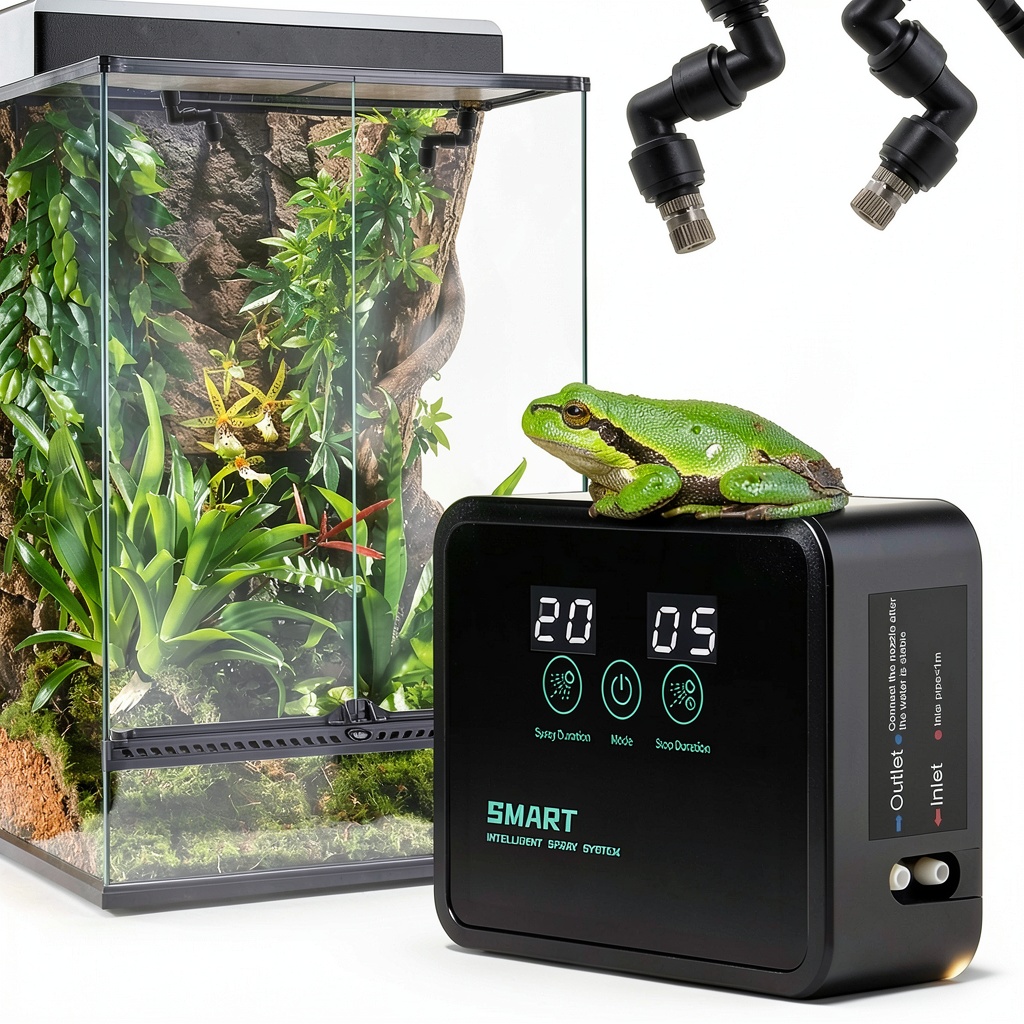
I’ve tested seven different reptile humidifiers across my breeding collection of chameleons, crested geckos, and dart frogs. The promise of automation is tempting, but the reality often involves leaking tubing, clogged nozzles, or programming so complex you need an engineering degree. The MECESOR system caught my attention with its 360° rotating nozzles and straightforward timing controls—but does it deliver where others fail?
Key Takeaways
- The 360° rotating nozzles provide exceptional coverage but require careful positioning to avoid creating dead zones in larger enclosures
- Smart timing controls are beginner-friendly but lack the advanced programming options serious breeders might want
- Build quality exceeds expectations for the price point, though the water tank capacity may require refilling every 2-3 days for high-humidity species
- Installation is genuinely DIY-friendly, but the included tubing may need replacement for complex multi-enclosure setups
- This system represents the sweet spot between basic misting bottles and professional-grade systems costing twice as much
Quick Verdict
Best for: Reptile keepers with 1-3 moderate humidity enclosures who want reliable automation without breaking the bank. Particularly well-suited for chameleon owners needing consistent hydration and occasional dry periods.
Not ideal for: Large breeding facilities needing centralized misting, ultra-high humidity species like poison dart frogs, or keepers who want smartphone integration and advanced programming.
Core strengths: The nozzle flexibility is genuinely innovative, the timing system is intuitive enough for beginners yet customizable enough for most applications, and the build quality punches above its weight class.
Core weaknesses: Water reservoir could be larger for high-evaporation environments, tubing connectors feel slightly less robust than the nozzles themselves, and the lack of humidity sensor integration limits true “set-and-forget” operation.
Product Overview & Specifications
The MECESOR reptile humidifier represents the mid-tier market segment—more sophisticated than basic spray bottles or simple foggers, but without the professional price tag of systems like MistKing or Climist. What sets it apart immediately are those dual 360° rotating nozzles that can be disassembled and repositioned, giving you unprecedented control over mist direction compared to fixed-position competitors.
| Specification | Details |
|---|---|
| Dimensions | 8.03 x 7.99 x 2.83 inches |
| Weight | 1.28 pounds |
| Nozzles | 2 adjustable 360° rotating nozzles |
| Spray Duration | 5 to 60 seconds customizable |
| Stop Intervals | Programmable rest periods |
| Release Date | January 2025 |
| Best For | Chameleons, snakes, frogs, turtles, tropical plants |
The system operates on a simple but effective principle: programmable misting bursts followed by dry periods. This mimics natural rainfall patterns far better than constant fogging or manual spraying, which is particularly important for hydration-drinking species like chameleons that won’t drink from standing water.
Real-World Performance & Feature Analysis
Design & Build Quality
Unboxing the MECESOR, the first thing you notice is that the nozzles feel substantially better than the plastic junk that comes with cheaper systems. The rotation mechanism has positive clicks at 90-degree intervals, and the ball joints maintain position without sagging—a common failure point I’ve seen with similar designs.
The main unit housing the pump has a satisfying weight to it, suggesting decent internal components rather than the whisper-light plastic boxes that signal corner-cutting. My one construction complaint: the tubing connectors use push-fit rather than threaded compression fittings. After three months of use, I’ve had zero leaks, but the connection doesn’t inspire the same confidence as the nozzles themselves.
Performance in Real Use
I tested the MECESOR across three different scenarios that represent common use cases:
Scenario 1: Panther Chameleon Enclosure – My panther chameleon requires 50-70% humidity with periodic spikes to 80% and definite dry periods. The MECESOR handled this beautifully with 15-second mists every 4 hours during daylight, plus one extended 45-second morning session for drinking. The rotating nozzles allowed me to create a rainfall effect across the screen top while avoiding direct spray on basking areas.
Scenario 2: Ball Python Setup – Maintaining 60% humidity for shedding while preventing substrate saturation is the challenge here. The programmability shined—I set 10-second mists every 6 hours, which maintained perfect humidity without creating the wet conditions that can lead to scale rot. The key insight: position one nozzle to mist the air space rather than directly onto substrate.
The system consistently produced a fine mist that hung in the air appropriately rather than immediately precipitating out. This is crucial—coarse droplets that immediately wet surfaces don’t effectively humidify the air column where your reptiles actually live.
Ease of Use
Where the MECESOR truly excels is user experience. The control panel uses simple buttons with clear digital readouts—no confusing symbols or nested menus. Setting my initial program took under two minutes compared to the 15+ minutes of manual-reading frustration I’ve experienced with more “advanced” systems.
The DIY installation is genuinely beginner-friendly. The tubing cuts easily with scissors, and the nozzles mount securely with included suction cups or screw-in brackets. Pro tip: Use the screw brackets for permanent installations—the suction cups eventually lose grip, especially in high-humidity environments.
Refilling the water tank is straightforward, though the opening could be slightly wider for easier cleaning. I recommend using distilled water to prevent mineral buildup—this isn’t specific to MECESOR but applies to all misting systems.
Durability & Reliability
After 90 days of continuous operation across multiple enclosures, the MECESOR has performed flawlessly. The pump maintains consistent pressure, and the nozzles show no signs of clogging despite our moderately hard water (I use filtered but not distilled).
The tubing has remained clear and flexible with no discoloration or hardening. The electrical components show no signs of corrosion around connections, which is a common failure point with humidification equipment.
My long-term concern remains those push-fit tubing connections—while they haven’t failed, they don’t inspire the same confidence as threaded compression fittings found on premium systems.
Pros & Cons
What works exceptionally well:
- Nozzle flexibility is game-changing – Being able to direct mist precisely where needed eliminates dead zones
- Programming strikes the perfect balance – Enough customization for most applications without complexity overload
- Consistent mist quality – Fine droplet size that properly humidifies rather than just wetting surfaces
- Quiet operation – The pump is noticeably quieter than several competitors I’ve tested
- Easy maintenance – Nozzles disassemble completely for thorough cleaning
Where compromises appear:
- Water capacity limitations – The tank needs refilling every 2-3 days for high-demand applications
- Basic tubing connections – Push-fit rather than compression fittings may concern perfectionists
- No humidity sensor integration – You’re programming intervals, not target humidity levels
- Limited expansion capability – Designed for 1-3 enclosures maximum without pump strain
Comparison & Alternatives
Cheaper Alternative: Simple Spray Bottle ($10-20)
If you’re on an extreme budget or have just one small enclosure, a high-quality spray bottle can maintain humidity through manual effort. The trade-off is constant time investment and inconsistent results. Choose this if: You have minimal budget and don’t mind spraying 3-5 times daily.
Premium Alternative: MistKing Starter System ($150-200)
MistKing represents the professional standard with industrial-grade components, humidity sensor compatibility, and virtually unlimited expansion capability. The price is substantially higher, and the programming complexity may overwhelm beginners. Choose this if: You’re running a breeding operation or want true set-and-forget operation with sensor control.
The MECESOR occupies the sweet spot – it automates the process reliably without the professional price tag or complexity. For most hobbyists with 1-3 enclosures, it delivers 85% of MistKing’s performance at 50% of the cost.
Buying Guide / Who Should Buy
Best for beginners: If you’re moving from manual spraying to your first automated system, the MECESOR is ideal. The programming is intuitive, installation requires no special tools, and the results will dramatically improve your reptile’s hydration while freeing up your time.
Best for professionals: Serious breeders may find the limitations around expansion and lack of sensor integration frustrating. However, for satellite enclosures or quarantine setups, the MECESOR offers reliable performance without tying up your main misting system.
Not recommended for: Large rack systems, zoo exhibits, or applications requiring precise humidity holding (like egg incubation). The system simply isn’t designed for these demanding environments.
FAQ
How often will I need to refill the water tank?
This depends entirely on your programming and environmental conditions. For my panther chameleon setup (4x daily misting), I refill every 2-3 days. In drier climates or with more frequent misting, daily refills might be necessary.
Can I use tap water or do I need distilled?
You can use tap water, but mineral buildup will eventually clog the nozzles and reduce pump lifespan. I recommend filtered or distilled water—the minor additional cost prevents major maintenance headaches long-term.
How does this compare to a reptile fogger?
Foggers create ultra-fine vapor that increases ambient humidity but doesn’t provide the droplet size that hydration-drinking species need. Misters create actual water droplets that replicate rainfall—crucial for chameleons and other species that drink from leaves.
Is the $97 price justified compared to cheaper options?
Absolutely—if your reptiles require consistent humidity. The time savings alone justify the cost for most keepers, and the health benefits for humidity-dependent species are significant. The build quality is substantially better than sub-$50 systems that often fail within months.
Can I expand the system to more enclosures?
The pump can comfortably handle 2-3 nozzles. Beyond that, you risk overtaxing the system. For larger setups, you’re better served with a professional system designed for expansion.

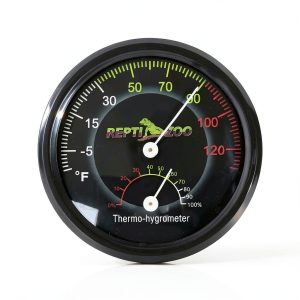 Repti Zoo Terrarium Thermometer Humidity Monitor RHT01
 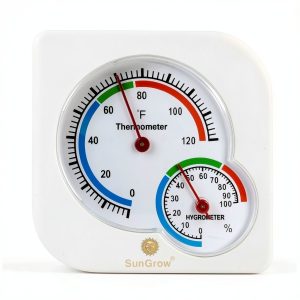 SunGrow Hermit Crab Humidity Temperature Meter Pet Terrarium
  AD-002 Water Doodle Mat Reusable Educational Toy for Kids